
Hey there! I’m Zara, and I’m 12 years old just like some of you. I started Assetsforkids because I think we should learn about money early. Today I want to share something super cool with you.
Did you know that when your family gives money to help others, they might get some back? It’s true! When grown-ups donate to charities, they can reduce how much they pay in taxes. The government lets families deduct up to 60% of their income when they help good causes.
This kids charity guide will show you why your parents talk about donations during tax season. You’ll learn how being generous actually rewards your family. We’ll explore what charity means and how the government encourages people to give back.
Understanding charitable donations for kids like us is important. It helps us become smart with money and generous people. Ready to discover this awesome connection between helping others and saving money?
What Is Charitable Giving and Why Should Kids Care?
Ever wondered about charitable giving? Let me explain it in simple terms. It’s when you give money, time, or things to help others or causes you like.
Sharing your lunch with a friend who forgot theirs is like charity. Families give money to help feed people, care for animals, build schools, or help during disasters. These groups are called charities.
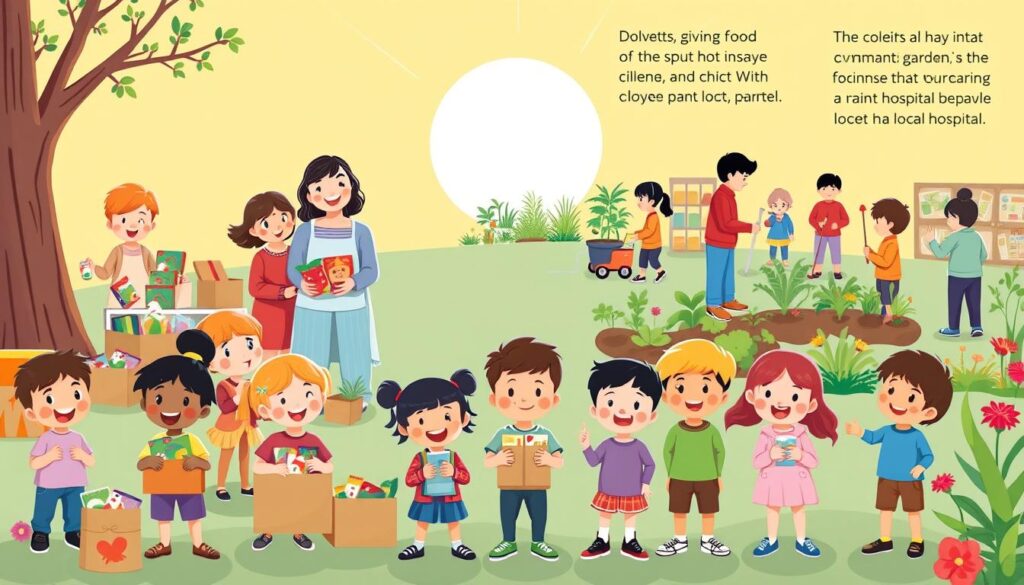
Here’s something cool: when your parents give to charities, they might get money back when they do taxes. It’s like the government says, “Thanks for helping others – here’s a little reward!” This is called tax benefits for families.
Why should we care as kids? Helping others makes us feel good. Studies show that people who help others are happier and healthier.
Also, learning about charitable giving now helps you make smart money choices later. And you can start helping now with your allowance or by volunteering.
When you know how your family’s giving affects money, you join in on money talks. You’re not just a listener anymore.
Different Ways Kids Can Give to Charity
There are many ways kids can help others. You don’t need lots of money to make a difference. Even small amounts can help a lot.
Donating money is a common way to help. Giving $5 or $10 can really help. This teaches kids about taxes and how it works.
Another way is to donate items you don’t use anymore. Clothes, books, and toys can help others. Your parents can even get tax benefits for these donations.

Volunteering your time is also rewarding. You can’t get tax benefits for your time. But, your parents can deduct expenses like gas money.
Fun Volunteer Ideas for Kids
Here are some cool ways to volunteer:
- Help at food banks – sorting donations or packing meals
- Read to younger children at libraries or community centers
- Walk dogs or play with animals at local shelters
- Clean up parks or beaches with your family or scout group
- Organize fundraisers like bake sales or car washes at school
You can also start your own charity projects. Some kids collect supplies for homeless shelters or organize toy drives. These activities teach you about planning and money management.
The best thing about giving is how good it feels. You learn valuable skills while helping others.
How My Family Chooses Which Charities to Support
My family doesn’t pick charities randomly. We have family meetings to decide. It’s fun and teaches us about money.
Every holiday, my parents and I talk about giving. We pick causes we care about. Sometimes it’s animal shelters, other times food banks.
My parents check if charities are “qualified.” This means the government says they’re real and deserve tax breaks. You can use the IRS Exempt Organizations Select Check tool to check any charity.
We also think about our budget. Being kind is important, but we must take care of ourselves. We set aside money for giving and decide how to share it.
We give in many ways:
- Donating money directly
- Giving items we no longer need
- Volunteering our time together
- Participating in fundraising events
I get to help choose charities. My parents teach me about charity tax deductions explained. It makes me feel important in our family’s money planning.
What Are Taxes and How Do They Connect to Giving?
Taxes can seem confusing at first. But, they’re actually pretty simple. Let’s talk about tax education for children in a way that’s easy to understand.
Think of taxes like this: when your parents work, they earn money. Some of that money goes to the government. The government uses it for things like schools and roads.
Now, let’s talk about charitable giving basics. The government wants people to help others. So, they created “tax deductions” to encourage giving.
It’s like the government is saying, “Hey, if you donate money, we’ll let you keep more of your own money.” That’s pretty cool, right?
Let’s say your parents earn $50,000 a year. They’d normally pay taxes on all of it. But if they donate $5,000 to charity, they might only pay taxes on $45,000. That means they save money on their taxes because they were generous!
There are rules, though. The charity has to be approved by the government. Your parents also have to itemize their taxes instead of taking a standard deduction.
The government says families can deduct up to 60% of their income in charitable donations. Most families don’t give away that much. But it’s good to know the limit exists. You can learn more about tax-deductible donations and how they work.
The important thing to understand is that giving to charity isn’t just about being nice. It’s also a smart financial move that can help your family save money on taxes!
Kids Guide to Understanding Charitable Giving and Taxes Benefits
Let’s look at how tax benefits for families work with examples. Seeing real numbers makes things clearer than just talking.
The Johnson family makes $60,000 a year. Without donations, they might pay $8,000 in taxes. But, if they give $6,000 to charities, they could pay only $6,500 in taxes.
This means they saved $1,500 on taxes by being kind. It’s like getting a discount for helping others.
Now, think about donating old toys and clothes. If your family gives $500 to Goodwill, your parents can use it to lower their taxes.
They just need to keep receipts and document everything. It’s like getting money back for cleaning out your closets.
Volunteering is also special. If your parents drive you to help animals, they can deduct gas money. It’s a small help but it adds up.
The government lets families deduct expenses for volunteering. This includes gas and supplies for charitable donations for kids and family activities.
But remember, giving to charity shouldn’t just be for tax benefits. The savings are a bonus for doing good, not the main reason.
When my family gives $100 to help hurricane victims, we might save $25 on taxes. But we really give because we want to help. Understanding the giving game and how helping others can benefit makes the tax savings feel like a reward for being kind.
Smart Ways for Kids to Track Their Giving
Tracking starts early, and I found simple ways for kids to help. Keeping records is super important for tax benefits.
I use a notebook for every donation. I write the date, what we gave, and how much. It’s like a diary for good deeds! This helps my parents at tax time.
We save receipts for money donations. My mom has a special folder for them. For online donations, we print emails or save them digitally.
Donations over $250 need special letters from charities. The government wants this proof.
For items like clothes, I look up prices online. We take pictures before donating. This is proof for taxes.
I use an app on my mom’s phone for tracking volunteer hours. It teaches me responsibility and helps us stay organized.
Teaching Your Friends About Charitable Giving
After learning about taxes and giving, I couldn’t wait to share it with my friends. They thought I was weird at first. But I showed them how cool it really is.
Teaching kids about taxes starts with the fun parts. I ask my friends what they care about. Maybe animals, hungry kids, or the environment. Then, I tell them how their families can help and get tax benefits too!
Maya was surprised to learn about her family’s car donation. Jake was amazed by his church donations. They both learned how these actions can lower their taxes.
We started a club at school to learn about charities. We had a bake sale for the animal shelter. I taught everyone how to deduct baking supplies from their taxes.
When my friends talk to their parents about giving, it’s amazing. Some families now think more about their charitable giving because of us.
We don’t have to wait to make a difference. We can start now.
Building Your Future as a Smart Giver
Learning about giving to charity early is a big plus for later. I’m already thinking about my family’s giving plans when I’m older. I want to donate more when I have more money.
When I turn 18, I might start a Donor-Advised Fund. It’s like a savings account for charity. You can save money for giving later.
My dad told me about Qualified Charitable Distributions. People over 70 can give from their retirement accounts. It’s a smart way to plan for the future.
Understanding charity tax deductions is key. It helps you give more wisely. You learn which donations help the most and save your family money on taxes.
Being a smart giver means being kind and smart. You give because you care, not just for tax breaks. You use tax knowledge to make your donations count more.
Start small with your allowance or birthday money. Keep learning about money and taxes as you grow. Every dollar you donate helps, with or without tax benefits. The goal is to be someone who gives generously and knows how to do it well.
FAQ
How much money do I need to donate to charity as a kid?
You don’t need a lot of money to help others. Even or can make a big difference. What matters most is learning to give and help others.
You can also donate things you don’t use anymore. Or, you can volunteer your time for free.
What does it mean when a charity is “qualified” for tax benefits?
A qualified charity is one the government says is real and deserves tax breaks. These are called 501(c)(3) organizations. Your parents can check if a charity is qualified online before donating.
How do tax deductions actually work when my parents donate to charity?
Tax deductions are like getting a discount for doing good. When your parents donate money, they can subtract that from their income before taxes. For example, if they earn ,000 and donate ,000, they might only pay taxes on ,000.
Can my family get tax benefits from donating old toys and clothes?
Yes! Donating items like toys, clothes, or books to qualified charities can save your parents money on taxes. They need to estimate the value of the items and keep receipts.
What’s the difference between volunteering and donating money for taxes?
You can’t get tax deductions for volunteering time. But, your parents can deduct expenses for volunteering, like gas or supplies. Money donations to qualified charities can be directly deducted from taxes.
How should families keep track of their charitable giving?
Keep all receipts from money donations in a special folder. Take pictures of donated items before giving them away. Write down details like dates, amounts, and which charity received the donation.
For donations over 0, the charity must send a special acknowledgment letter.
Why shouldn’t families donate just to get tax benefits?
The main reason to donate is to help others and causes you care about. Tax benefits are like a bonus reward from the government. When my family donates 0, we might save on taxes, but we’re really donating because we want to help people.
What are some fun volunteer ideas for kids?
Kids can help at food banks, read to younger children at libraries, or walk dogs at animal shelters. They can also help clean up parks, organize school fundraisers, or start charity projects like toy drives. These activities teach money management while helping others.
How can I start conversations about charitable giving with my friends?
Ask your friends what causes they care about. Then explain how your families might already be supporting these causes. Share cool examples, like how donating an old car to charity can help with taxes, and focus on the fun parts before talking about complicated tax stuff.
What’s a Donor-Advised Fund and should kids know about it?
A Donor-Advised Fund is like a special account where you can put money for charity and let it grow over time before deciding exactly where to donate it. It’s an advanced giving strategy that’s good to know about for when you’re older and have more income to manage.
Can families deduct up to any amount in charitable donations?
The government allows families to deduct up to 60% of their income in charitable donations. But most families don’t give away that much. There are also rules about itemizing deductions versus taking the standard deduction that affect how much benefit families actually get.
What are Qualified Charitable Distributions for older adults?
Qualified Charitable Distributions allow people over 70 to donate directly from their retirement accounts to charity and get special tax benefits. It’s an advanced strategy that’s good to understand for future financial planning, even though it won’t apply to kids for many years.